Creating a Warm and Engaging Classroom Atmosphere with the Welcome Back Little Bookworm Design
The beginning of a new school year is more than just a logistical shift; it is an emotional transition for students, teachers, and parents alike. For many children, returning to the classroom can trigger a mix of excitement and anxiety. This is where thoughtful design plays a pivotal role in setting the tone for the months ahead. Enter the Welcome Back Little Bookworm design—a charming, cartoon-style artwork that does more than simply decorate a space. It actively cultivates a warm, happy, and inviting classroom vibe that celebrates the joy of reading and learning.
In an era where visual communication is paramount, educators and creators are increasingly turning to high-quality digital assets to enhance their environments. Whether you are a teacher looking to spruce up your classroom walls, a small business owner creating back-to-school merchandise, or a parent crafting personalized gifts, understanding the value and versatility of this specific design is essential. This article explores why this adorable bookworm character is becoming a staple in educational settings and how its technical specifications make it a practical choice for various creative projects.
The Psychology of Visuals in Education
Before diving into the specifics of the design itself, it is important to understand why visuals matter in education. Research in educational psychology suggests that the physical environment significantly impacts student engagement and behavior. A classroom that feels welcoming, colorful, and personalized reduces stress and fosters a sense of belonging. The "Welcome Back Little Bookworm" design leverages these principles through its use of friendly imagery and positive symbolism.
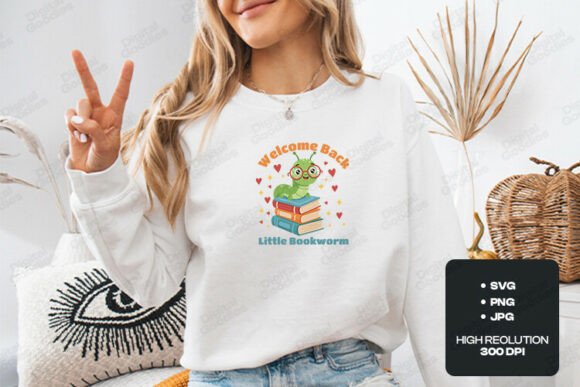
The central figure, a cute bookworm sitting atop a stack of books, serves as a powerful metaphor for learning. Worms are often associated with digging deep into soil to find nutrients; similarly, readers dig deep into texts to find knowledge. By personifying this act with a cute, smiling character surrounded by hearts and sparkles, the design transforms the abstract concept of "studying" into something approachable and delightful. It signals to students that books are not burdensome tasks but sources of happiness and discovery. This subtle psychological cue can help ease the first-day jitters, making the library or reading corner a sanctuary rather than just a room.
Breaking Down the Design Elements
The aesthetic appeal of the Welcome Back Little Bookworm lies in its simplicity and charm. The character is depicted in a cartoon style, which is universally appealing across age groups. The inclusion of hearts emphasizes love—specifically, a love for literacy—while the sparkles add a touch of magic and wonder. These elements work together to create a cohesive narrative that aligns perfectly with the goals of early childhood and elementary education.
Furthermore, the composition is balanced and uncluttered. The bookworm is positioned centrally on a stack of books, providing a clear focal point. This balance ensures that the design remains legible and impactful even when scaled down for smaller items like stickers or enlarged for large-format posters. The use of bright, cheerful colors (typically implied by such designs) further enhances the mood, stimulating creativity and energy without causing visual fatigue.
Technical Versatility: Why File Format Matters
One of the most significant advantages of modern digital design assets is their format flexibility. The Welcome Back Little Bookworm design is provided in three distinct formats: PNG, SVG, and JPG. Each format serves a specific purpose, ensuring that users can utilize the artwork in the most effective way possible for their particular needs.
High-Resolution PNG for Digital and Print Clarity
The PNG (Portable Network Graphics) version of this design is high-resolution at 300 DPI (dots per inch) and features a transparent background. This transparency is crucial. It allows the bookworm to be placed over any background color or image without a distracting white box surrounding it. This makes the PNG file ideal for:
- Digital Use: Adding the character to social media posts, email newsletters, or digital planners where a clean integration with the existing layout is required.
- Print Projects: Creating custom stickers, decals, or labels where the shape of the design must match the cut line exactly.
Scalable SVG for Unlimited Creativity
The SVG (Scalable Vector Graphics) file is perhaps the most valuable asset for serious designers and crafters. Unlike raster images (like JPGs or PNGs), which are made of pixels and can become pixelated when enlarged, SVGs are made of mathematical paths. This means they can be scaled to any size—from the size of a fingernail to the size of a billboard—without losing quality. Additionally, SVG files allow for easy editing of colors and shapes within vector editing software like Adobe Illustrator or Inkscape. This format is perfect for:
- Cutting Machines: Using with Cricut or Silhouette machines to create vinyl decals for water bottles, laptops, or classroom doors.
- Customization: Adjusting the color palette to match specific school branding or personal preferences.
Versatile JPG for Quick Sharing and Basic Printing
The JPG (Joint Photographic Experts Group) file is a universal standard for images. Also provided at 300 DPI, this format is compatible with almost all devices and software. While it lacks the transparency of the PNG and the editability of the SVG, it is excellent for straightforward applications such as:
- Posters and Flyers: Quickly printing large banners for hallway displays.
- Quick Mockups: Previewing how the design might look on different products before committing to production.
Practical Applications in Modern Education and Business
The utility of the Welcome Back Little Bookworm design extends far beyond simple decoration. Its adaptability makes it a versatile tool for various stakeholders in the education ecosystem.
For Educators: Enhancing Classroom Culture
Teachers spend considerable time curating their classroom environment. This design can be used to create a cohesive theme for the first week of school. Imagine a "Reading Nook" adorned with posters featuring the little bookworm, encouraging students to visit daily. It can also be printed on name tags, reward charts, or bookmarks, reinforcing positive behavior associated with reading. By integrating this design into daily routines, teachers subtly communicate that reading is a joyful, communal activity.
For Entrepreneurs: Capitalizing on Seasonal Trends
Small business owners and Etsy sellers can leverage this design for the lucrative back-to-school market. Because the design comes in multiple formats, entrepreneurs can produce a wide range of products:
- Apparel: Sublimation printing on t-shirts, hoodies, and tote bags for teachers and students.
- Stationery: Printing on planners, notebooks, and sticker sheets.
- Home Decor: Creating framed prints or canvas art for home learning spaces.
The high resolution and vector capabilities ensure that these products maintain professional quality, which is essential for building customer trust and repeat business.
For Parents: Personalized Learning Tools
Parents who homeschool or support their children’s education at home can use this design to create personalized learning aids. Stickers made from the SVG file can label bins, encourage chore completion, or mark progress on reading logs. The friendly character helps demystify the learning process, making it feel like an adventure rather than a obligation.
Common Misconceptions About Digital Designs
It is worth addressing a common misconception: that digital designs are less impactful than hand-drawn illustrations. While hand-drawn art has its place, digital designs offer precision, consistency, and scalability that are difficult to achieve manually. Moreover, the "hand-crafted" look of cartoon characters like the Little Bookworm can mimic the warmth of hand-drawn art while retaining the technical benefits of digital creation. Another assumption is that such designs are only suitable for very young children. However, the universal appeal of cute aesthetics means they can be adapted for older students through more sophisticated color palettes or combined with complex typography for middle-grade audiences.
Conclusion: Investing in Joyful Learning Spaces
The Welcome Back Little Bookworm design is more than just a cute image; it is a strategic tool for enhancing the educational experience. By combining psychological insights about environmental impact with technical versatility, this artwork supports the creation of spaces where students feel safe, inspired, and eager to learn. Whether you are using the PNG for a quick digital greeting, the SVG for intricate craft projects, or the JPG for large-scale posters, this design offers a simple yet powerful way to celebrate the start of a new academic journey.
Incorporating such thoughtful design elements into our classrooms and homes reminds us that education is not just about acquiring facts—it is about cultivating a love for discovery. Let the little bookworm guide your students toward a year filled with curiosity, creativity, and joy.